
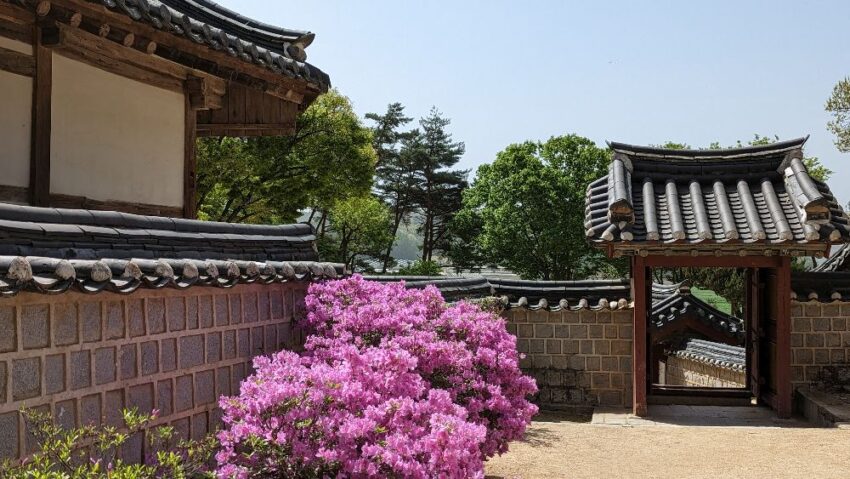
I have just got back from a wonderful adventure in Japan and South Korea, and although my mind is full of vibrant images, what I’m really thinking about is food. I don’t eat meat, which is very easy at home, but a bit harder in countries where you have no knowledge of the language beyond “thank you” and “I’m sorry”. Although I can express gratitude for my food and apologise when I spill it over someone, ordering it in the first place is a challenge. The food in Japan is sublime, particularly the seafood. I love the delicate, crispy batter of lightly cooked tempura and I think sushi is one of life’s great joys. I first tried sushi in my 20s and I can still remember waking up in the night and thinking how wonderful it had been. I also love the little dishes of fermented and pickled vegetables, but the Japanese do eat a surprising amount of meat. Everything was fine, however, until I got to South Korea.
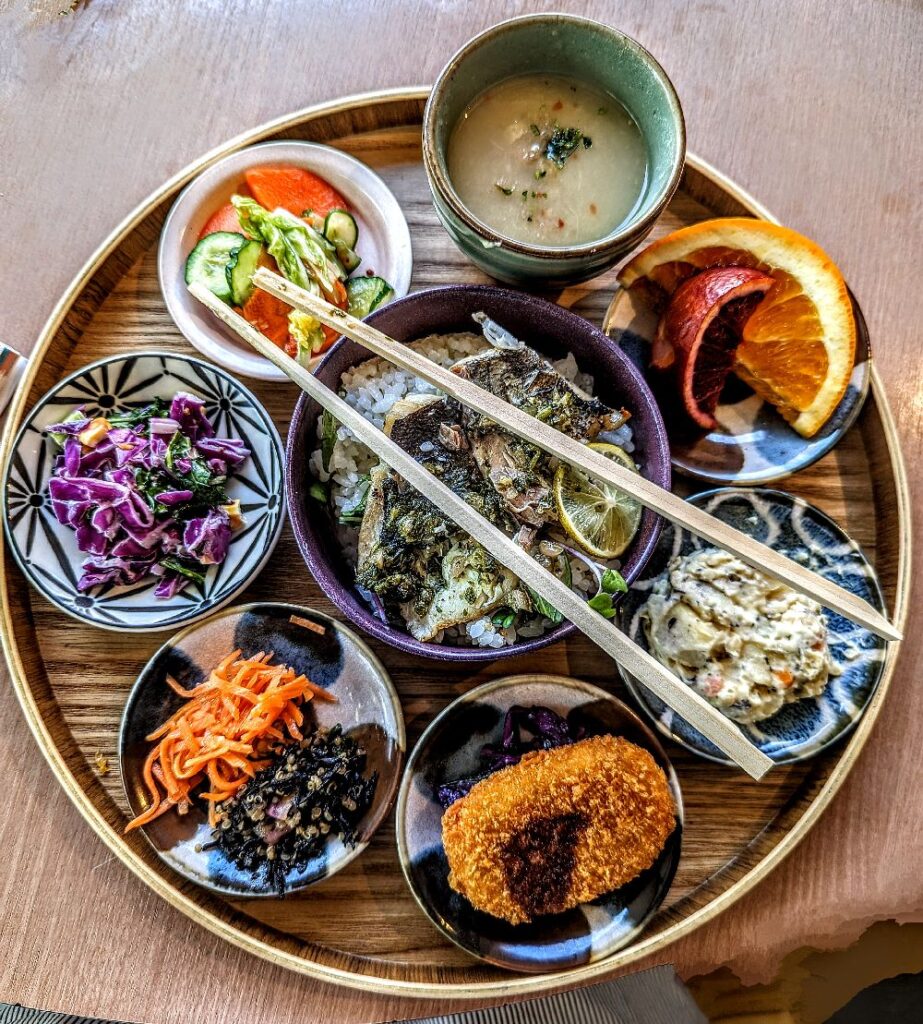
The Koreans adore meat. It is a complete mystery to them why anyone would choose not to eat it. Our guide obviously thought I was unhinged, but was far too polite to say so. I suspect that this is rooted in the extreme poverty and deprivation they experienced following the Korean War of 1950-1953. Food was in very short supply and I bet meat was almost impossible to come by. Even now a common Korean greeting is “Have you eaten?” – left over from a time when people often didn’t have enough to eat and friends and relatives were checking on them. We took to asking our guide if she’d eaten breakfast instead of saying good morning to her, which made her laugh.
I speak three words of Korean and can’t read any, although Google Translate is a great help. A big problem is that many restaurants specialise in one item rather than offering a menu with various options. Restaurants might serve a Korean barbecue, which is either pork or beef; chicken and beer is also a very popular combination, but that’s probably all they’ll serve. If you don’t want those things, you have to go somewhere else.
Koreans inject meat wherever they can. We settled down happily to eat at a street-foody sort of place that specialised in dumplings, (foolishly) confident that they’d have veggie or fish dumplings. No, even the shrimp dumplings had minced pork stuffed in them. And it’s kimchi with everything. I do like cabbage, preferably cooked with lots of pepper and butter, but kimchi is cold, spicy and garlicky and I’m not a great fan, although I’m sure it’s very good for you, especially once it’s several years old and nicely fermented. I’m sure my gut was grateful, but my taste buds not so much.
I did discover the joys of Bibimbap – which is great if you can stop them adding minced pork to the tasty vegetables and rice. Also, I had the most delicious grilled mackerel with spicy chilli sauce. These were the high points in my food experience. The low point was when we stayed at Haeinsa Buddhist Temple. The temple is absolutely beautiful and its location on the slopes of Mount Gaya is breath-taking. Visitors can see the Tripitaka Koreana, a vast collection of Buddhist texts engraved on 80,000 woodblocks between 1237 and 1248. They are truly wonderful and the buildings constructed in the 15th century to house them are works of art in themselves. However, things took a turn for the worse when we went for supper.
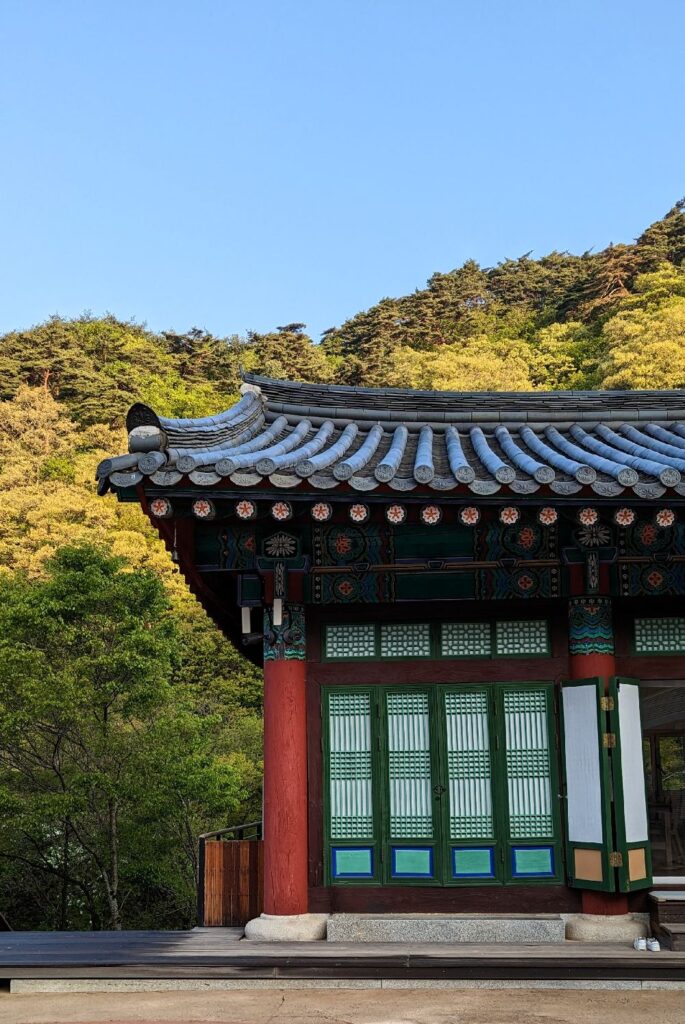
The meal was to last precisely 20 minutes and we were instructed to take only what we could eat – nothing must be wasted. I had been quite looking forward to eating vegetarian meals at the temple, avoiding the usual challenge of finding something I could eat. The food was awful, however: raw, tasteless and bitter at the same time. All shovelled in at a break-neck pace. Even pork-stuffed shrimp dumplings were starting to look appealing. We also ate in silence. It was the most dismal dining experience of my life and the opposite of how I think meals should be – delicious, leisurely, relaxed and sociable. I just could not face it all again the next morning and skipped 6 o’clock breakfast, which I later heard was dominated by tapioca and even worse than the night before. I bet you’re thinking it was just an excuse to stay in bed, but I had been up for 4.30 prayers. I know, it’s hard to believe.
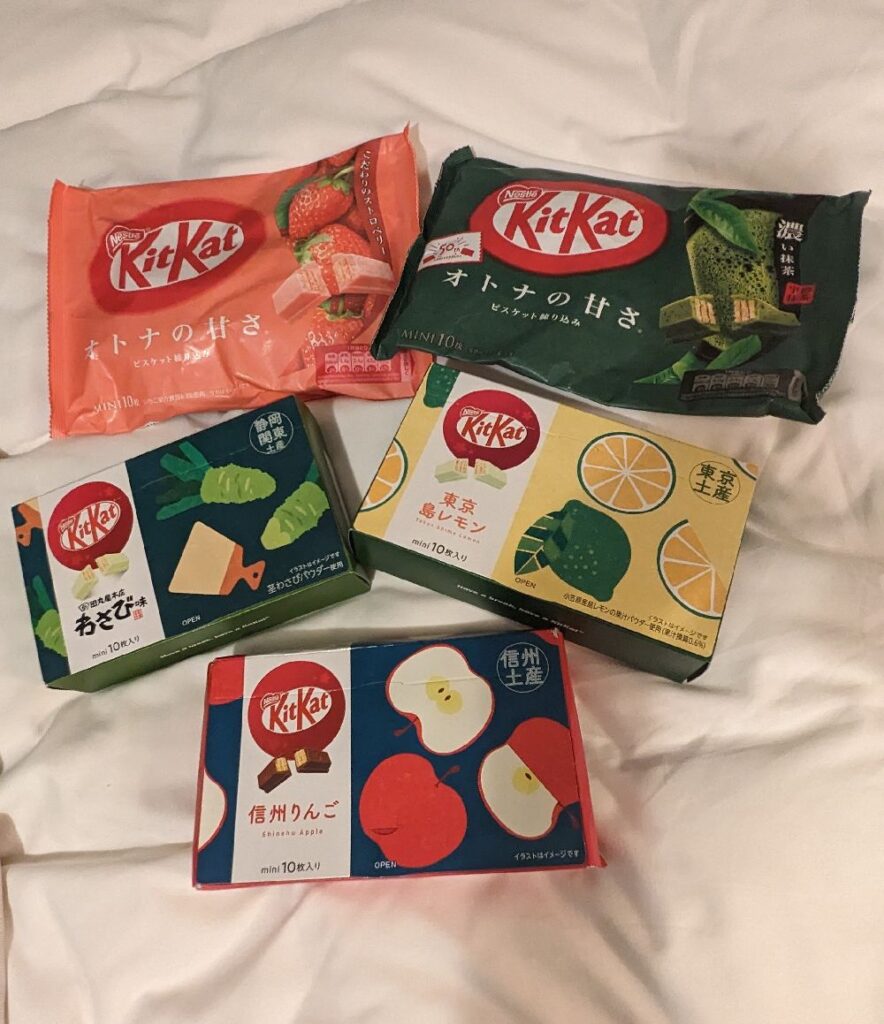
Now that we’re home, food is no longer a battle, but I like a challenge and we’re working our way through the unusual flavours of Japanese KitKats that we brought home. We’ve tried strawberry, matcha and lemon. Wasabi is next. The adventure continues.
In general, I didn’t like all the different Kit Kat varieties in Japan. I preferred the usual version. But certainly worth trying.
I expect a full report on the Wasabi KitKat!
I loved following your adventures through your lens. Let’s have a sushi date next time you jump the pond 🍣
I’ll be there!
Good to hear you’re travelling again, Sheridan. Do post more of your travels in Japan & South Korea. My reading group this month has been Toni Morrison’s ‘Home’, about the Korean war veteran…..not an easy read.
I hope you’re travelling as well? I like Toni Morrison, but I’m not sure I’m up to a story about a Korean war veteran.